In Uruguay the Ports Act n° 16.246 creates the “Free Port” regime mentioned above, of 1992, which establishes:


The Port of Montevideo is the first Terminal in the Atlantic Coast of South America to operate under the “Free Port” regime, which grants several benefits representing operational, customs and taxes advantages for those companies operating in the port site.
Accordingly, the main port of the country has a customs site where different services can be provided logistically adding value to the goods, creating a Distribution Center for the region.
In Uruguay the Ports Act n° 16.246 creates the “Free Port” regime mentioned above, of 1992, which establishes:

Investment Promotion and Protection Law No. 16,906, with its current regulatory decree 002/012. Foreign investment is treated by law the same way as national investment.
Law 17,574 – provides important incentives for companies that wish to establish themselves in them, exemptions and specific tax credits.- / Decree 524/055.
Law 19,784, Promotion and development of Industrial Parks and Scientific-Technological Parks.
“an industrial park is an urbanized land subdivided into plots, according to a general plan, equipped with roads, means of transportation and public services, which may or may not have built factories that sometimes have common services and facilities and sometimes do not, and which is intended for the use of an industrial community.”
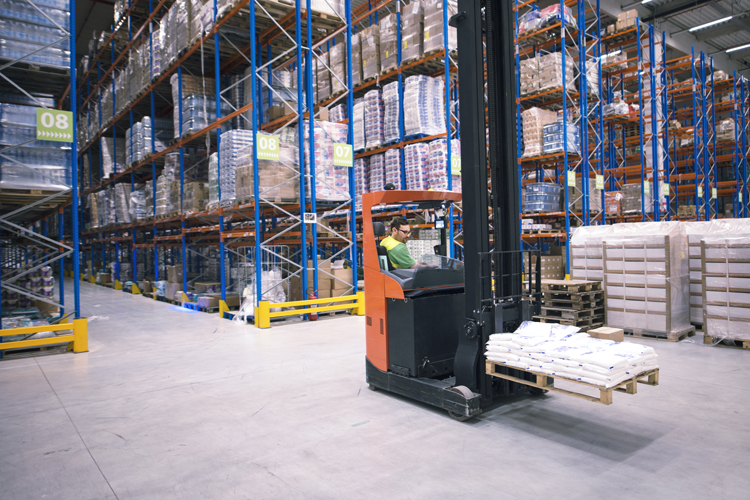
Companies installed in IP can obtain both the general benefits of the investment as well as the specific benefits of the IP.
According to LAW 16,906, the foreign investor enjoys the same incentives as the local investor, there is no discrimination from a tax point of view or restrictions on the transfer of profits abroad.
Decrees 455/007,008/012 and 143/018 update Law 16,906, allowing the exemption of income tax on economic activities (IRAE) between 20% and 100% of the amount invested, depending on the project. The net worth tax is also exempt from movable property of fixed assets and civil works and VAT is recovered from purchases of materials and services for the latter.- This law also exempts the importation of movable property from fixed assets from taxes or fees, declared non-competitive by the DNI.
Law 19,784 stimulates industrial value chains, through investment, value addition, research, innovation, knowledge generation, technological progress and the creation of jobs, in a spatial environment of promotion of associativity and generation of synergies, and seeking the geographical decentralization of economic activities.
IRAE exemption for up to 100% of the amount actually invested.
Net Worth tax exemption
Exemption from fees and taxes, included in the VALUE ADDED TAX (VAT), on the import of fixed asset goods intended for the installation’s operations, as well as fixed asset goods and materials intended for the civil works corresponding to the installer, as long as they do not compete with the national industry.
Decree 79/20 Regulates Law 19,784, which indicates that if benefits are granted in relation to the IRAE, the amount of the tax exempted, the period to enjoy the exemption will increase by 15%. They will be able to access this benefit.
Industrial activities.
They provide services such as storage operations, conditioning, selection, classification, fractionation, assembly, disassembly, manipulation or mixing of merchandise or raw materials, linked to the activities carried out in the park.
Solar thermal and/or photovoltaic energy generation activities framed in promotional measures of the executive branch.
Waste recovery and use activities.
Decree 524/005 – Regulates Law 17,547. Article 6 = In addition to industrial operations, the following activities may be carried out:
1- Storage operations
2- Conditioning
3- Selection
4- Classification
5- Fractionation
6- Assembly
7- Disassembly
8- Handling or mixing of merchandise or raw materials, provided that they are exclusively associated with the industrial activities installed in the parks.
9- Retail trade is prohibited.
Merchandise term = Without limits.

This Code and other provisions that make up customs legislation will be applied throughout the territory of the Republic of Uruguay and in the enclaves granted in its favor.
Customs territory is understood to be the geographical area within which customs legislation is applicable.
Exclaves granted in favor of other countries or blocks of countries are not part of the customs territory.
This Code will be applied without prejudice to the international treaties that are in force on the date of their entry into force.


The global economy implies greater access to international markets, increasing the volume and complexity of commercial transactions, which also increases the possibilities of misunderstandings and/or large disputes between merchants.
The Incoterms 2020 rules on the use of commercial terms, issued by the International Chamber of Commerce (ICC), facilitate and simplify communications, reducing the risk of misunderstandings in commercial operations.

The first background document of Incoterms dates back to 1936 and since then it has not only been globally accepted, but has also been updated periodically, thus keeping pace with the evolution of international trade.
The Incoterms rules are a set of commercial terms designated by three letters (Example CIF), in order to summarize the main obligations, costs and risks assumed by the parties in a contract for the sale of goods (risks, costs, organization of transport and customs clearance). However, Incoterms do not replace specific obligations of the sales contract, therefore, it is the responsibility of the parties to provide for the respective particularities of the business in the contract.
There are eleven Incoterms 2020 rules, four of them are the so-called “maritime” ones applicable to “Maritime Transport and inland waterways” (FAS/ FOB/ CFR/ CIF) and the remaining seven are “multimodal” or applicable to “any mode or modes of transport” (EXW/ FCA/CPT/CIP/ DAP/ DPU/ DDP).
Although its inclusion in commercial contracts is not mandatory, its scope and meaning is accepted in all customs and courts in the world, however, for its applicability, specific reference must be made to the chosen term, the year of its revision and geographical location.
This Incoterm is applicable to any means of transport and establishes the seller’s obligation to simply make the merchandise available to the buyer at the agreed point, with the buyer assuming all costs and risks that occur from receipt of the merchandise to the final destination.
This Incoterm is applicable to any means of transport and increases the obligations and risks borne by the seller, who complies by delivering the merchandise in its own facilities when loading it on the means of transport provided by the buyer or, if the place designated for the delivery is other, when it transports it in its means of transport and not only arrives at the agreed place, but also prepares it for unloading from its means of transport, leaving it at the disposal of the carrier or any other person designated by the buyer.
It is applicable to any means of transport. It means that the seller pays for transportation to the agreed destination, but delivers the merchandise to the buyer, with the corresponding transfer of risk, when it places them in the possession of the carrier.
It is applicable to any means of transport. Although the seller pays for transportation to the agreed destination, he delivers the merchandise, with transfer of risk, when it places them in the hands of the carrier that the seller himself contracted, but in this case the Incoterm requires the seller to take out insurance.
It is applicable to any means of transport. In this case, the seller delivers the merchandise with transfer of risk, when it is made available to the buyer in the means of transport prepared for unloading at the agreed destination.
It is applicable to any means of transport and is new to Incoterms 2020, deleting the “DAT” (Incoterms 2010). In this case, the seller delivers the merchandise with transfer of risk, when it, once unloaded from the means of transport, is made available to the buyer at the agreed destination.
It is applicable to any means of transport. In this case, the seller delivers the merchandise with transfer of risk, when it is made available to the buyer cleared for importation in the means of transportation of prompt arrival for unloading at the agreed destination.
It is applicable to maritime transport and inland waterways. In this case, the seller delivers the merchandise with transfer of risk, when it is placed next to the ship or barge designated by the buyer at the port of shipment.
It is applicable to maritime transport and inland waterways.
The seller delivers the merchandise on board the ship established by the buyer at the port of shipment. The risk is transferred when the merchandise is on board the ship.
It is applicable to maritime transport and inland waterways.
The seller assumes the cost and freight, duties not paid until arriving at the agreed port of destination. Delivery is verified and risk is transferred when the merchandise is on board the vessel.
It is applicable to maritime transport and inland waterways.
The seller assumes the cost, insurance and freight, duties not paid until arriving at the agreed port of destination. Delivery is verified and risk is transferred when the merchandise is on board the vessel. This incoterm requires the seller to take out insurance.
DAT (Delivered at Terminal) is deleted and a new Incoterm appears: DPU (Delivered at Place Unloaded): Delivery and unloading at the agreed place.
FCA (+ agreed delivery place): It allows to issue a bill of loading
After loading the merchandise with the expression “ON BOARD” to meet the requirements of a documentary credit.
CIP and CIF are updated in terms of insurance.

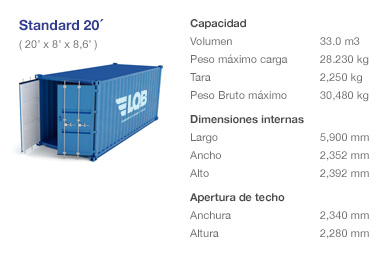
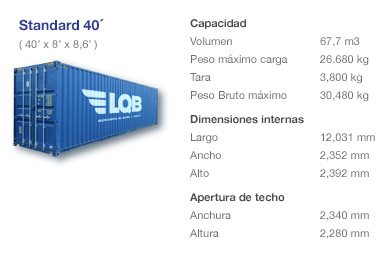
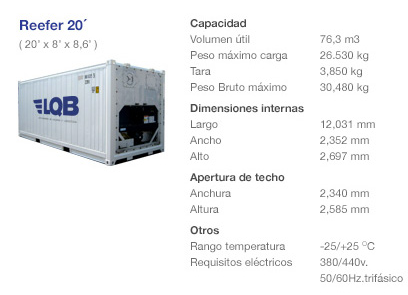
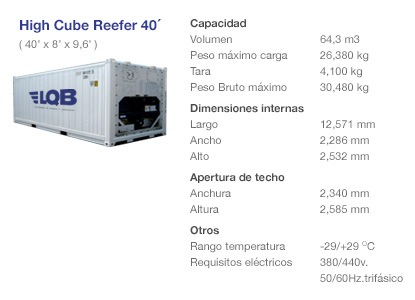
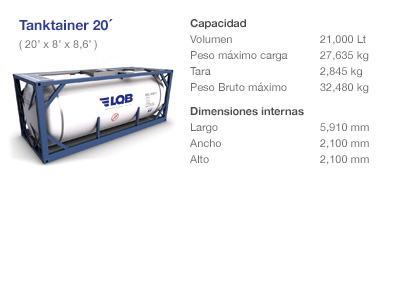
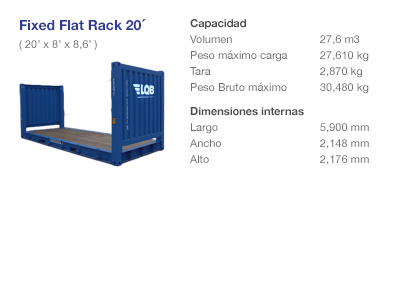
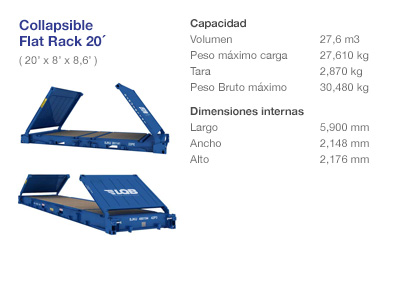
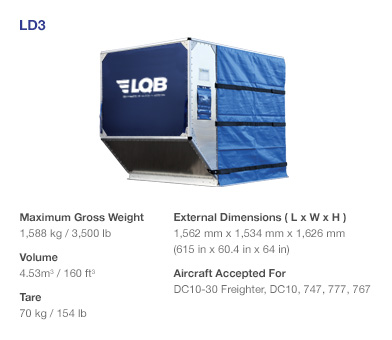
The interior/useful measurements that appear in this table are estimates, depending on the different manufacturers and lines. The maximum weights allowed by containers are regulated in each country.


In 2011, Law No. 18,786 was approved, which regulates the regime applicable to Public-Private Participation Contracts, regulated by Decree No. 17/2012.

Decree 045/013 establishes that the Executive Branch may grant the tax benefits provided for by the Investment Promotion Law (Law 16,906) to Public Private Participation (PPP) contracts.
One of the first applications developed based on this regime were construction, rehabilitation and maintenance works on routes, thus aiming to improve land connectivity in Uruguay.
Public Private Participation contracts are those in which a Public Administration entrusts a private person, for a period of time, a task that includes any of the following services: design, construction, maintenance, operation of infrastructure.
The following are examples where this regime can be applied:
– Road, railway, port and airport works;
– Energy infrastructure works;
– Waste disposal and treatment works;
– Social infrastructure works, (example: prisons, health centers, education centers, social housing, sports complexes and urban improvement, equipment and development works).
Contracting Public Administration: it is the public body interested in the project.
Public-Private Participation Projects Unit of the Ministry of Economy and Finance (MEF): it is the office responsible for the registration, study, control and monitoring of projects.
National Corporation for Development (CND): non-state public legal entity in charge of advising at the stage of drafting contracts and promoting projects.
Office of Planning and Budget (OPP): Unit of the Presidency of the Republic in charge of the national public investment system that acts by coordinating public sector investment.
Court of Auditors (TC): control body in charge of monitoring the execution of budgets.
Bidders must provide a guarantee of the maintenance of their offer prior to the opening of offers by deposit in cash or public securities, bond or bank guarantee, in national or foreign currency that the Administration must expressly determine in the specifications.
The successful bidder may apply the amount of the bid maintenance guarantee to the contract performance guarantee or proceed to a new constitution of the latter.

The customs warehouse is a place authorized by the competent authority, in which the merchandise enters and remains in a privately administered space, benefiting from a tax suspensive regime, for the purpose of a future customs operation.
Customs warehouses are very useful for the transit of merchandise, contributing to the formation of the regional logistics hub, even offering the possibility of adding value to them. Its permanence period within the warehouse is 24 months, which cannot be extended.

During their stay in the customs warehouse, the merchandise is exempt from taxes.
The origin of the merchandise is not affected by its entry into a customs warehouse.
The validity of the certificate of origin is computed as of the exit of the merchandise from the warehouse (180 days).
The merchandise can be divided into fractions, in which case certificates of derived origin are issued.
According to the Customs Code of the Republic of Uruguay (CAROU), storage is authorized in the following forms:
The merchandise can only be the subject of operations designed to ensure its recognition, conservation, division into lots or volumes and any other operation that does not alter its value or modify its nature or state.
The merchandise may be the subject of operations intended to facilitate its commercialization or increase its value, without modifying its nature or state.
The merchandise may be subject to operations aimed at modifying its nature or state, including the industrialization of raw materials and semi-finished products, assemblies, and any other analogous operation.
The merchandise may be subject to repair and maintenance services, without modifying its nature
The foreign merchandise entered may be destined for exhibitions, demonstrations, fairs or other similar activities, with prior authorization from the National Customs Directorate.
The merchandise may be subject to operations that may modify its state or nature, as long as they do not modify its origin and consist of: assemblies; mixtures; placement or replacement of parts, pieces or accessories; hardware configuration; software installation; preparation of containers, packaging, labels or other products as long as they are used for the marketing of merchandise that will exit the warehouse; and other similar operations that the Executive Branch establishes.

The Investment Promotion regime is framed in Law 16,906, in which the promotion and protection of investments made by national or foreign investors in the national territory is declared of national interest.

The foreign investor enjoys the same incentives as the local investor, with no discrimination from a tax point of view or restrictions on the transfer of profits abroad.
Existence of general and automatic incentives for investment.
Projects promoted by the Executive Branch may have special tax benefits.
Companies located in Free Zones have extensive tax exemptions.
1) General incentive for the investor:
It applies to taxpayers of the Income Tax from Economic Activities (IRAE) and the Tax on the Disposal of Agricultural Assets who carry out industrial or agricultural activities. The Investment Law establishes the granting of the following benefits:
Exemption from the Net Worth Tax (IP) of movable property intended directly for the production cycle.
Exemption from the Value Added Tax (VAT) and the Specific Internal Tax (IMESI) corresponding to the Importation and refund of VAT included in purchases in the market of movable property intended for the production cycle and equipment for electronic data processing.
2) Incentive regarding specific investments:
Those companies in any line of business that present an investment project and that it is promoted by the Executive Branch, will have the possibility of accessing additional benefits. The benefits to which companies whose investments are promoted by the Executive Branch may benefit are the following:
Net Worth tax
Import fees or taxes
VAT
Fees and salaries in technological developments of priority areas.
IRAE

The Free Airport is a regime that grants important benefits and facilities to operations carried out on merchandise that transit through the Carrasco International Airport (Montevideo, Uruguay).
The benefits provided for in the law translate into operational, customs and tax advantages for those companies that carry out operations at the airport site.
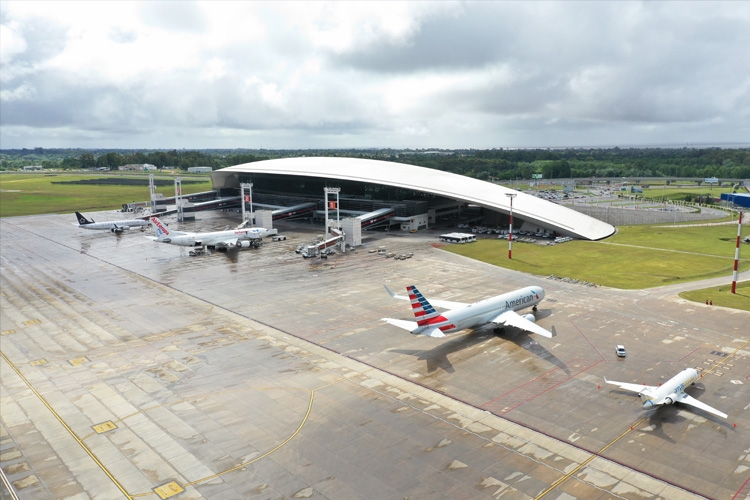
In 2002, Law No. 17,555, in article 23, decreed the application of the Free Port regime (established in the Ports Law No. 16,246 of 1992) to the Carrasco International Airport.
Consequently, the country’s main air terminal has an airport customs facility where various logistical value-added services can be provided to merchandise, giving rise to the creation of a Distribution Hub for the region.
In Uruguay, the Ports Law, 16,246, which creates the beforementioned “Free Port” regime, dates from 1992, which establishes the following:
During their stay in the premises, the merchandise is exempt from taxes and surcharges applicable to or at the time of importation.
Tax-free circulation within the premises.
Services provided within the Free Port exempt from VAT.
Free circulation and free change of destination of merchandise.
Distribution Hub.
Trade in transit.
Processes with merchandise, as long as their nature is not modified.
Deadline for storage of goods: 5 years (extendable).
The origin of the merchandise is not lost by entering the regime.
The validity of the certificate of origin is computed as of the exit of the storage (180 days).
The merchandise can be partially divided, issuing derived certificates of origin.
Storage.
Repacked.
Relabeled.
Classified.
Grouped and Ungrouped.
Consolidated and Unconsolidated.

The Uruguayan Free Zones are an unavoidable point of reference for any organization that intends to develop activities in the Southern Cone, because they present unmatched comparative advantages for carrying out industrial, commercial and service activities.
The promotion and development of Free Zones in order to promote investment, exports, employment and international economic integration have been declared of national interest according to Law 15, 921.

a) Marketing, deposit, storage, conditioning, assembly, disassembly, manipulation or mixing of merchandise or raw materials of foreign or national origin.
b) Installation and operation of manufacturing establishments.
c) Provision of financial, computer, repair and maintenance, professional and other services required for the management and functioning of the installed activities and the sale of said services to third countries.
Exemption from IRAE for the activities carried out
Net Worth tax exemption
VAT exemption:
– Circulation of goods and provision of services in FZ
– Entry of goods from abroad to FZ
State monopolies will not govern in Free Zones.
75% of the staff must be Uruguayan citizens.
The entry and exit of merchandise to Free Zones is exempt from all taxes.
Social security contributions are not exempt, except for foreign personnel who may choose not to contribute.
Retail trade will not be allowed within the Free Zones.
It will be understood that there is an abandonment of merchandise once the period of 6 months has passed since the expiration of the last unfulfilled pecuniary obligation.
The goods will not lose their original character nor the preferential origin treatments upon entering the Free Trade Zone.
Merchandise coming from Free Zones to third countries will be subject to the corresponding tariffs.




+598 2710 00 03
+598 2710 00 04
Francisco García Cortinas 2388
CP 11300, Montevideo, Uruguay
comercial@lqb.com.uy
rrhh@lqb.com.uy
© 2023-2025 — LQB. All Rights Reserved.